Operating the Southwest Atlantic since 1980 — predating UNCLOS entry-into-force, the FICZ regulatory regime, and most counterparties active in the basin today.
Baixian Trade is the global trading arm of Baixian Group (百鮮集團), a Greater China seafood corporation incorporated in 1985 with continuous operations dating to 1965. The trading arm centres on cephalopods, Pacific pelagic species, and selected demersal finfish — sourced through a contract-fleet network across Taiwan and mainland China and processed through Group facilities in Kaohsiung and Fuzhou.
Institutional summary
What distinguishes us.
Three structural facts. Verifiable, dated, operational — the basis on which counterparties evaluate institutional substance.
Continuous operations through the Plaza Accord, the Asian Financial Crisis, the FICZ regime change, the 2008 GFC, and the post-COVID seafood-trade reset. Same family ownership throughout.
Operations span the SW Atlantic squid grounds, Pacific pelagic and cephalopod fisheries, and Indian Ocean coverage — sourced through Taiwan and mainland China origin streams.
Asset-heavy across two Kaohsiung facilities (BXTW-FAC-1 processing, BXTW-FAC-2 cold storage) and the Fuzhou Mawei facility BXGC-FAC-3 (co-located processing and cold-storage units), with administrative offices in Fuzhou, Shanghai, and Shenyang. The execution chain sits inside one corporate group.
Heritage
Six decades of operational record.
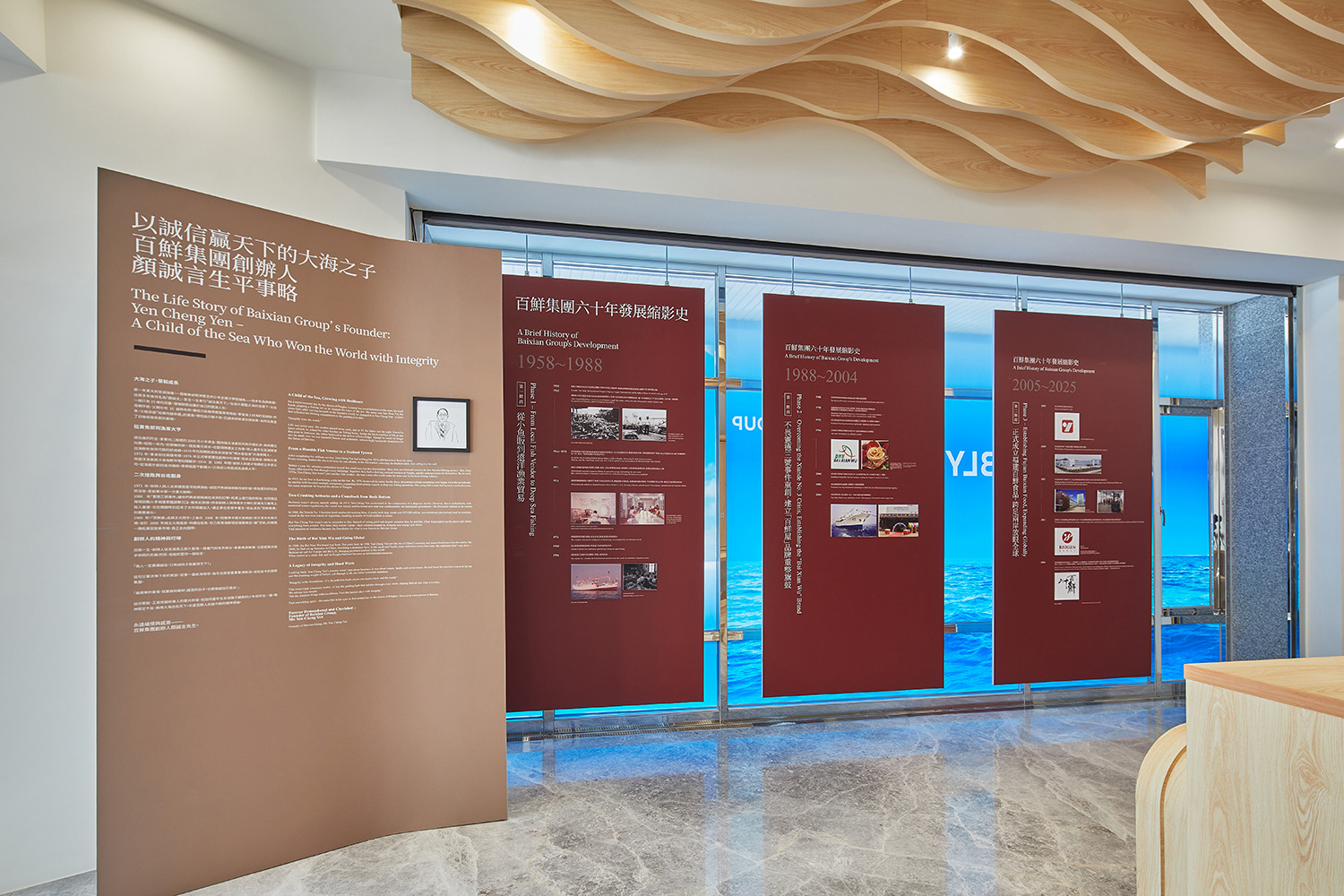
Six decades of investment decisions, fleet commissioning, and facility construction — from a NT$2,000 market stall in 1965 to a NT$480M deep-water fleet by 1983 to a cross-strait processing and cold-storage footprint today.
Linsen HQ · Corporate history wall
Era I · 1965 — 1986
Founding and distant-water expansion.
From a single Penghu market stall in 1965 to a four-vessel SW Atlantic fleet by 1983. The era takes the firm from a market-stall operator to a Taiwan-flag distant-water principal — eight vessels commissioned, five operating entities founded, oceanic footprint established years before UNCLOS came into force.
NT$480M+~US$12.5M at period ratesFleet capital · 1980—1983
8Distant-water vessels commissioned
5Operating entities founded
1980SW Atlantic operations begin
1965 Founding
Founding operations begin in Penghu.
A stall is established at the Penghu Magong fish market with starting capital of NT$2,000, trading fresh and frozen Pacific seafood across Taiwan domestic and early Japan-bound export channels.
1968 — 1970 Channel innovation
Brokerage and re-export channels established.
An agent-of-foreign-fishery model is pioneered in Penghu — discharge handling and onward sale of foreign-flag vessel catches into Taiwan domestic and onward-export channels, plus Penghu-to-Taiwan main-island logistics flows. By 1970, the firm holds a leading mid-tier wholesale position in the Penghu market.
1971 Distant-waterCapital · NT$23M
Yu Long (玉隆) Distant-Water Fisheries founded, with partner company Fei Teng (飛騰).
Two FRP-hulled distant-water shrimp trawlers commissioned for South-East Asian operations through Yu Long Distant-Water Fishery Company, with Fei Teng Distant-Water Fishery Company as partner company. Total capital invested at the time: NT$23M.
Distant-water fleet · Kaohsiung port · early 1970s
1973 Headquarters
Operational headquarters relocated to Kaohsiung.
Strategic relocation to Taiwan's largest commercial port and distant-water fishery hub. Kaohsiung remains the group headquarters today.
1974 Cold storageCapital · NT$30M
Nan Chiao Frozen Foods Co. (南喬冷凍食品) established.
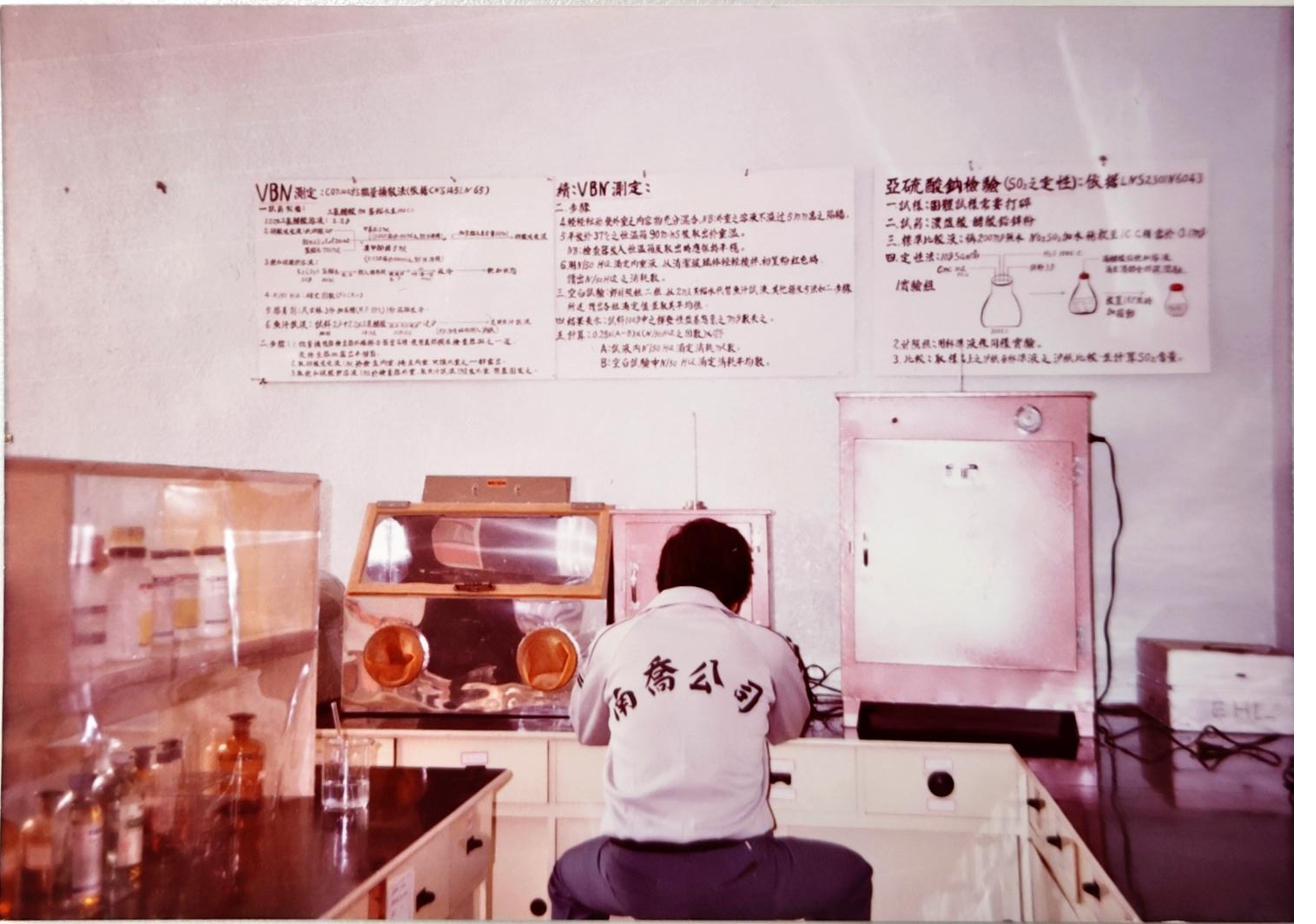
NT$30M investment in processing and storage capacity. Two product lines launched: small-grade whole squid for Europe (primarily Greece-bound), and packed frozen large shrimp for Taiwan domestic wholesale. The "frozen-then-traded" model that becomes the firm's vertical-integration moat first emerges here.
A 3,000-MT refrigerated transport vessel was leased privately for two years for at-sea bulk frozen-fish-and-shrimp trading.
1976 FleetCapital · NT$20M
Te Wang Fishery (德旺漁業) — drift-gillnet vessels commissioned.
Two vessels — Te Wang No.1 (德旺一號) and Te Wang No.2 (德旺二號) — commissioned for drift-gillnet operations in South-East Asian grounds. Total capital investment: NT$20M.
1977 Channel · Industry first
Nan Chiao Co., Ltd. (南喬股份) established for Japan-bound shrimp.
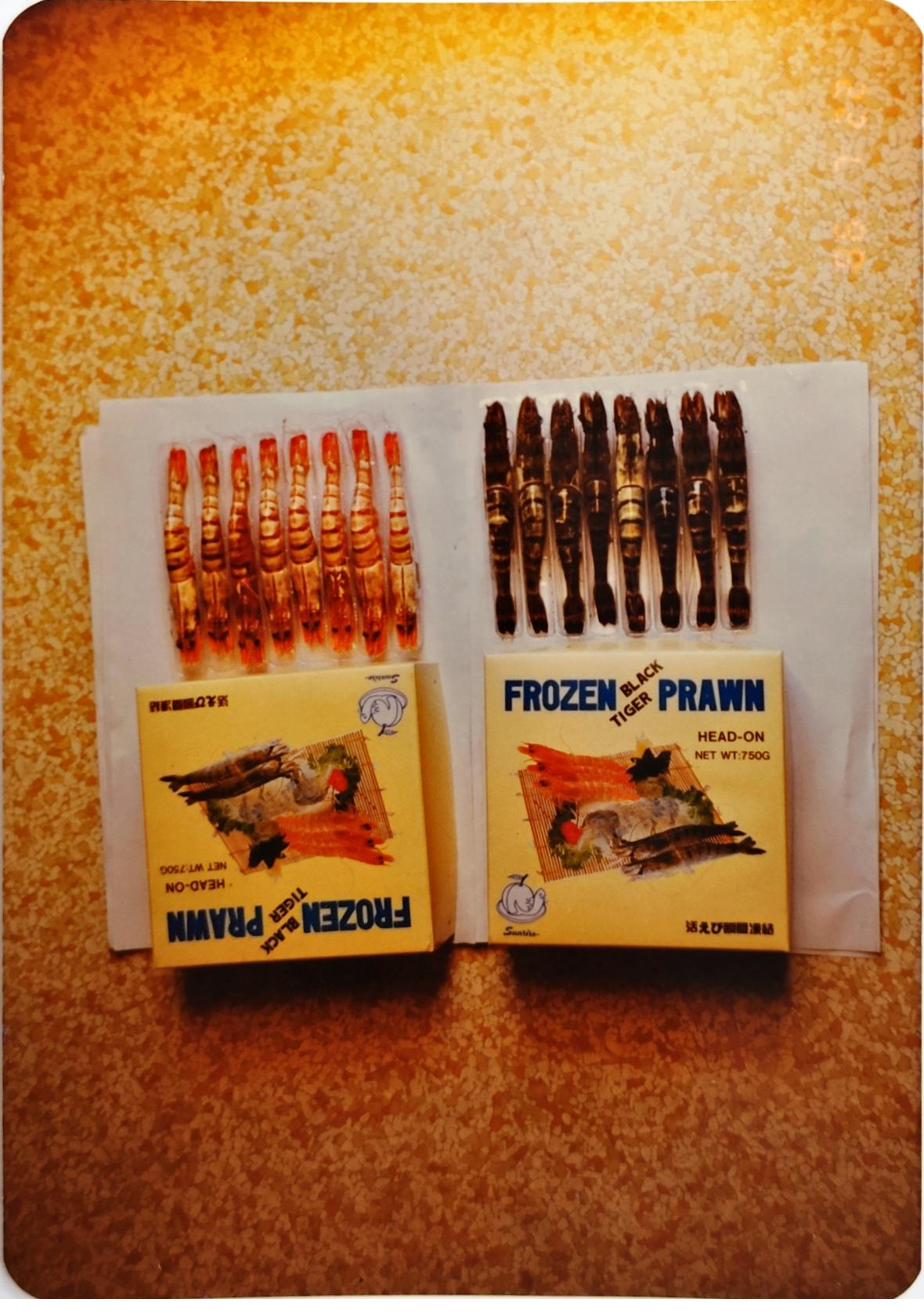
Established three processing and storage facilities for processing of farmed grass shrimp (草蝦) and sea-caught shrimp (海大蝦) for export to Japan via Tsujino and other Japanese trading houses. The firm becomes the first Taiwan operator to systematically export frozen shrimp into the Japanese market, growing to hold near-total share of Japan-bound frozen shrimp exports from Taiwan and introducing frozen shrimp into shabu-shabu and other Japanese foodservice channels at industrial scale for the first time.
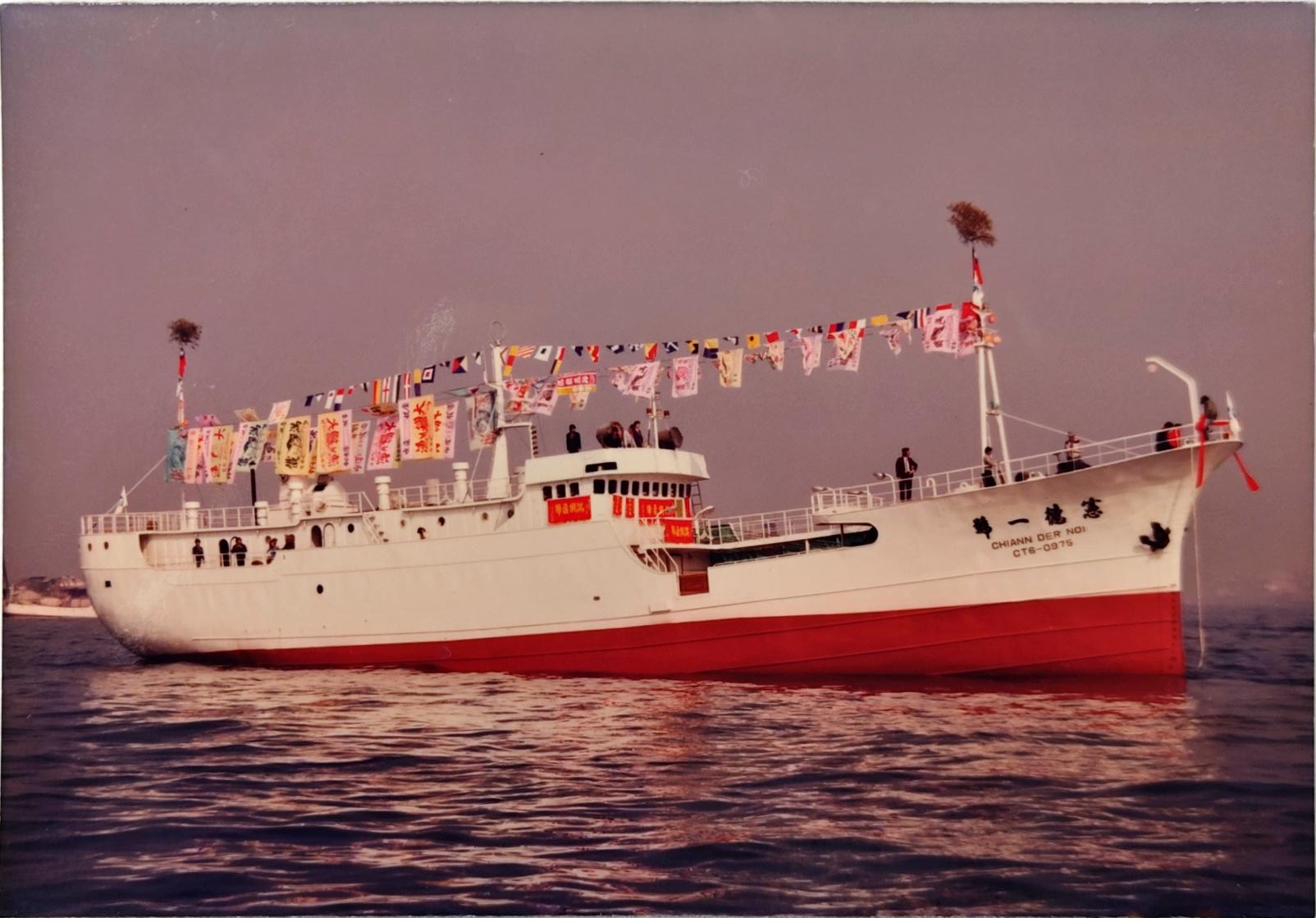
First vessel of Chiann Der Distant-Water Fisheries (憲德遠洋漁業), the firm's deep-water arm. Falkland Islands and Argentine shelf grounds enter the operational footprint, predating the FICZ regulatory regime (1986) and UNCLOS entry-into-force (1994).
Vessel classTuna longliner (鮪釣)
Gross tonnage450 GT
Total investmentNT$60M~US$1.7M
CHIANN DER NO.3 · 1981
1981 Squid jigger · Twice the tonnage
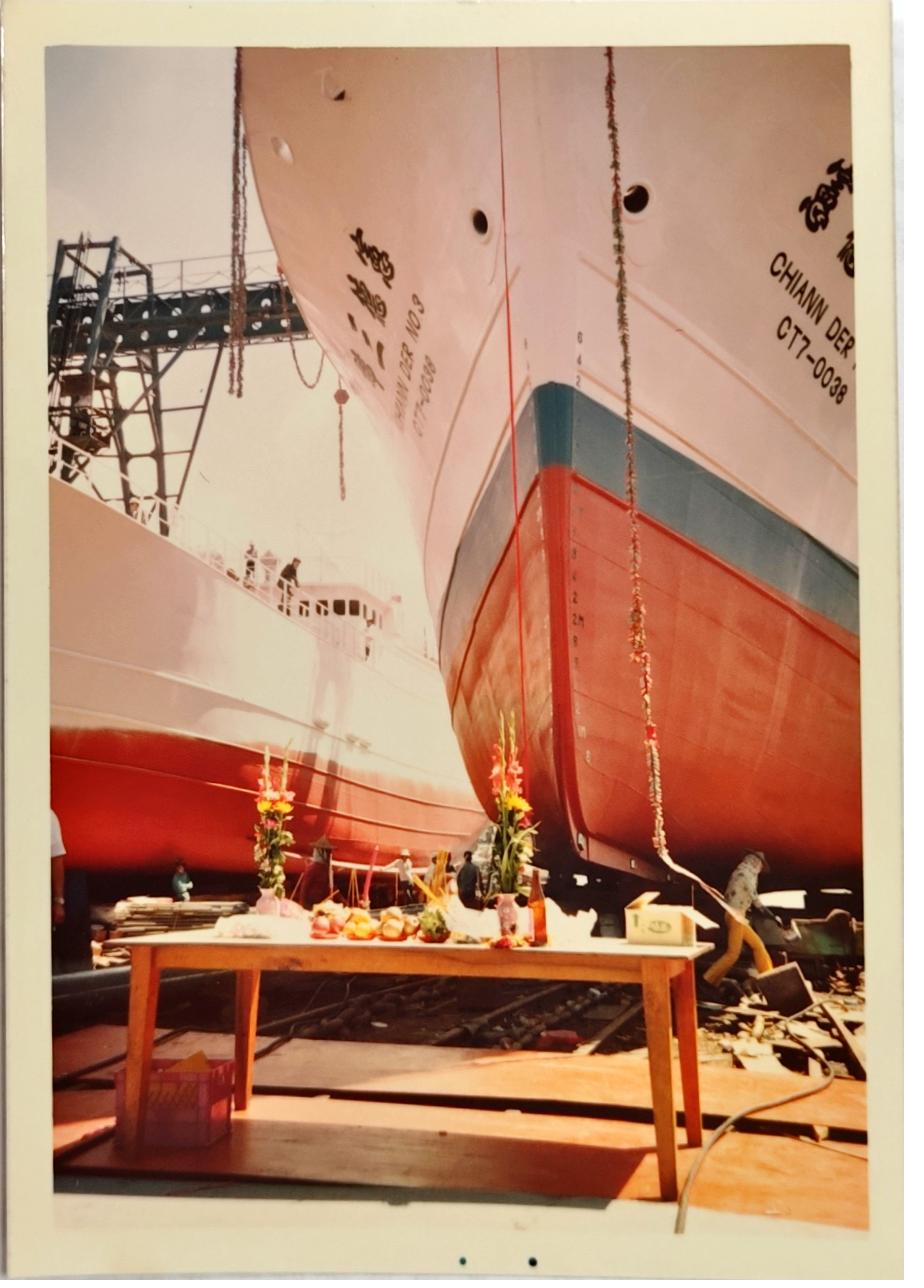
Chiann Der No.3 (憲德三號) — 900-GT squid jigger.
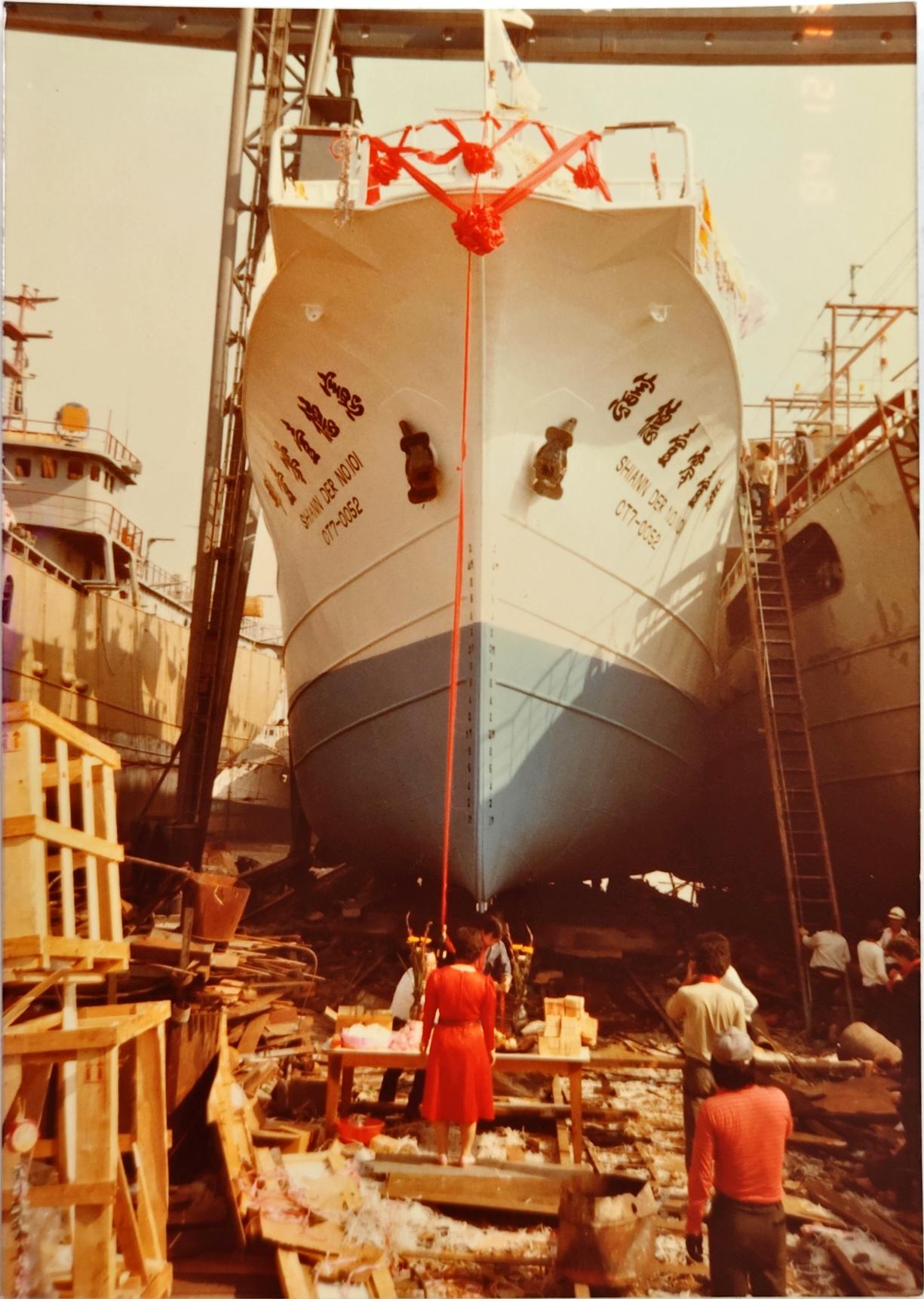
Twice the gross tonnage of No.1, with full transition to Illex argentinus jigging operations in the SW Atlantic. Sister hull launched alongside in the same shipyard cycle — visible in the launch photograph.
Vessel classSquid jigger (魷釣)
Gross tonnage900 GT
Total investmentNT$140M~US$3.8M
SHIANN DER NO.101 · 1982
1982 Dual-mode · Tuna + squid
Chiann Der No.101 (憲德101號) commissioned.
An 800-GT vessel built for combined tuna-longline and squid-jigging operations — a dual-capability hull configuration unusual for the period. Operated five voyages across the SW Atlantic and Japanese northern waters before being sold to a mainland Chinese company.
Vessel classTuna longliner + squid jigger
Gross tonnage800 GT
Total investmentNT$120M~US$3.1M
Industry first
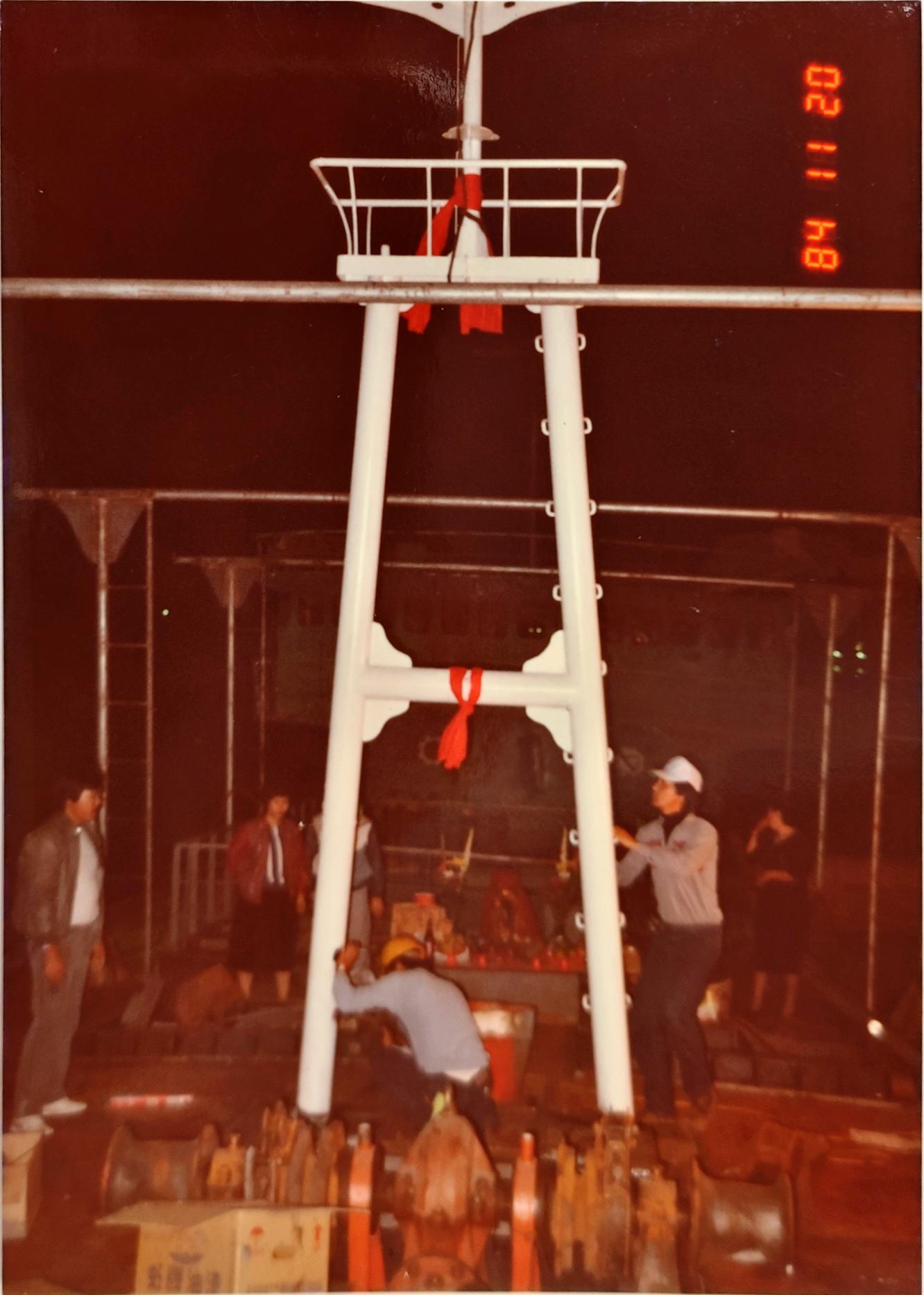
SQUID-JIGGER GANTRY · ATLANTIC OPERATIONS · 1983
1983 First TW-flag 1,000-GT-class squid jigger
Te Yi No.1 (德益一號) — 1,000-GT-class squid jigger.
The firm becomes the first Taiwan operator to commission a 1,000-GT-class distant-water squid jigger. The vessel deploys to the SW Atlantic squid grounds, marking the firm's full transition into industrial-scale Illex argentinus operations and setting a class benchmark Taiwan-flag operators followed for years.
Vessel classSquid jigger (魷釣)
Gross tonnage1,000 GT · industry first
Total investmentNT$160M~US$4.0M
1986 Operational continuity
SW Atlantic fleet operations continue through period of regulatory regime change.
The Falkland Islands Interim Conservation and Management Zone (FICZ) regulatory regime is established. The firm's operational footprint, continuous in the basin since 1980, predates the FICZ regime — and predates most counterparties active in the basin today.
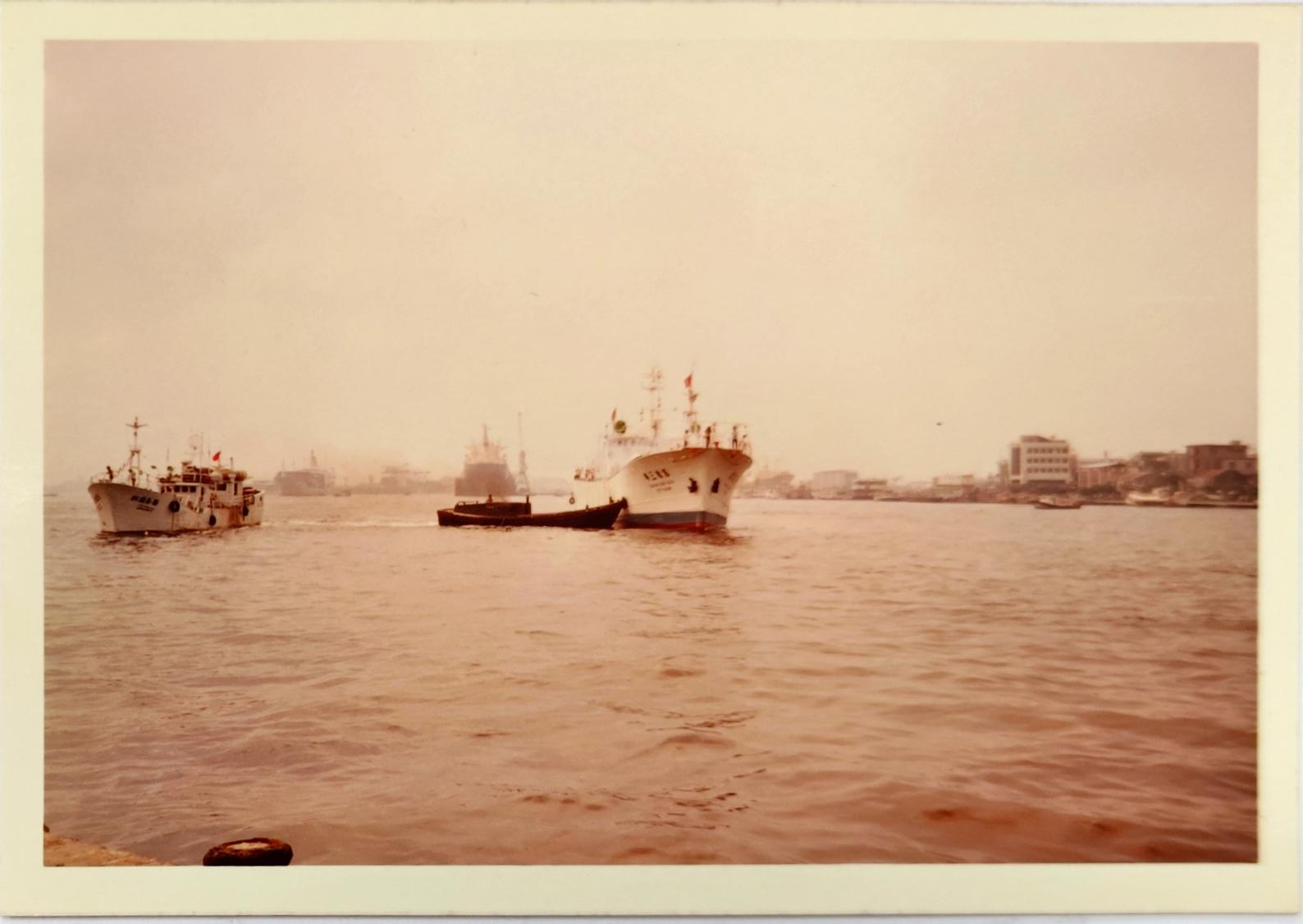
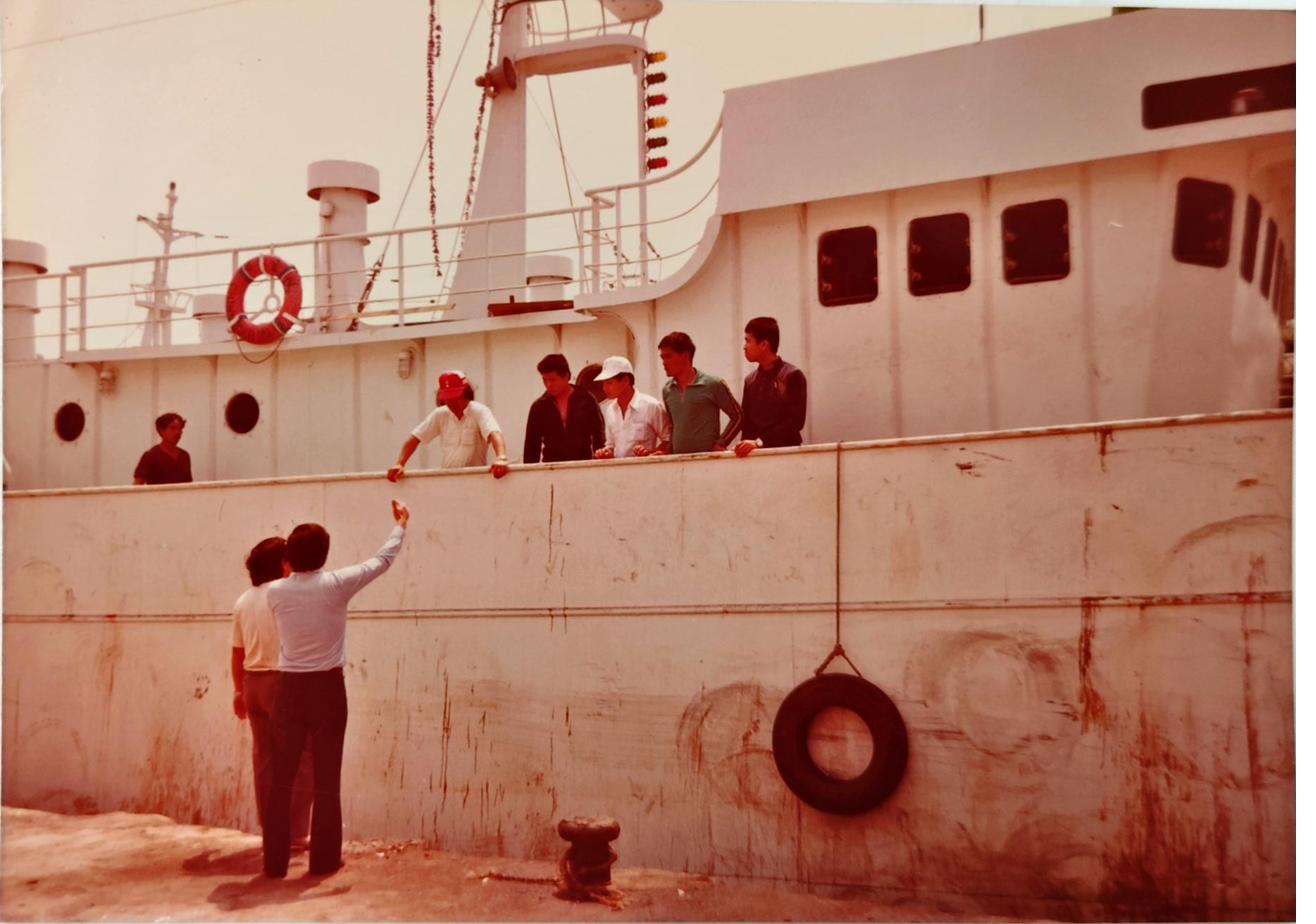
Distant-water vessel · returning to port · mid-1980s
Era II · 1988 — 2004
Brand and vertical integration.
The firm transitions from fishery operator to a fully integrated trading and processing entity. The Baixianwu brand consolidates the operating model that becomes the structural moat: sourcing → processing → cold storage → trade execution as a single coordinated chain. By 2004, the firm has commissioned two Kaohsiung facilities and turned cold-storage scale into pricing leverage in the squid category.
NT$327M+~US$10M at period ratesTaiwan asset capital · 1994—2004
2Plants commissioned in Kaohsiung
2Industry firsts
2000Mainland presence established
1988 Brand · Industry first
Baixianwu (百鮮屋) brand established. Vertical integration model formalised.
The firm transitions from a fishery-focused operator to a fully integrated trading and processing entity. The model — sourcing → processing → cold storage → trade execution as a single coordinated chain (整合一條龍式) — is industry-first in the Taiwan seafood trade and becomes the structural moat that defines competitive position from this point on. The fish-themed Baixianwu mark remains the visual anchor of the corporate identity to the present.
百鮮屋 · Baixianwu
Fish-themed mark
Established 1988
1990 Methodology · Industry first
Tail-count grading methodology established for Illex argentinus.
Tail-count specification grading anchored the industry reference for Japan-bound exports, then propagated across the global cephalopod trade — and remains the standard grading methodology for Illex argentinus and adjacent species today.
Tail-count squid grading · 1990
1992 Trade entity
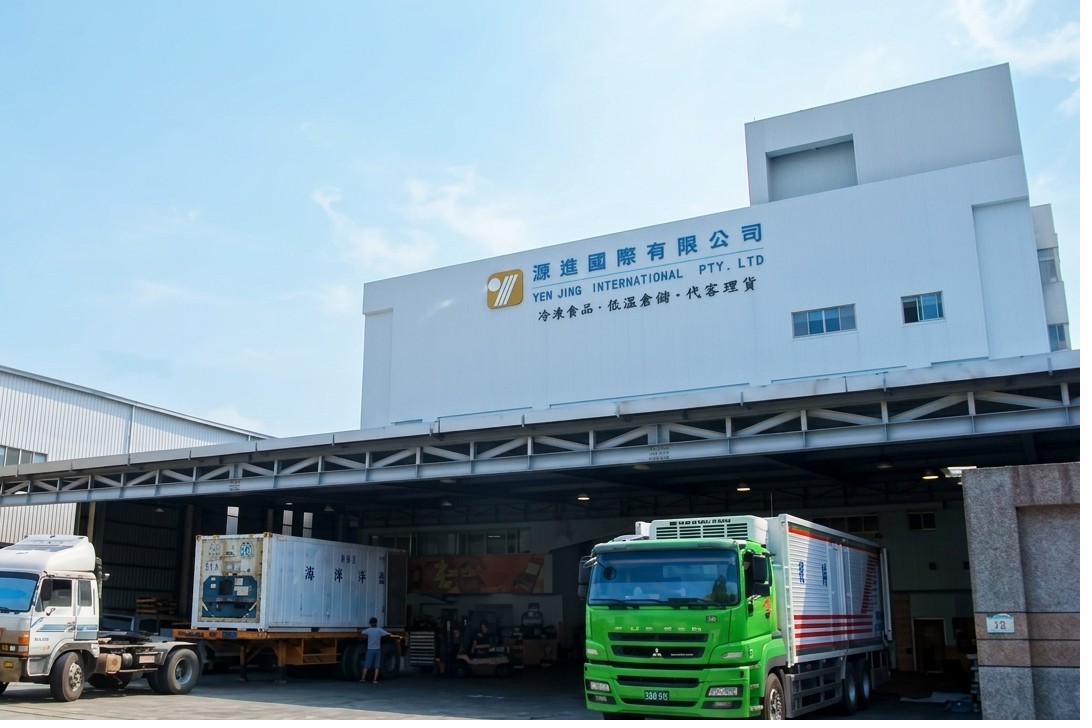
Yen Jing International Co., Ltd. (源進國際有限公司) established.
Dedicated import–export entity formed to deepen channel capacity for distant-water fishery and processed-product flows.
1994 IncorporationCapital · NT$20M
Bai Xian Wu Enterprise Co., Ltd. (百鮮屋企業股份有限公司) formally incorporated.
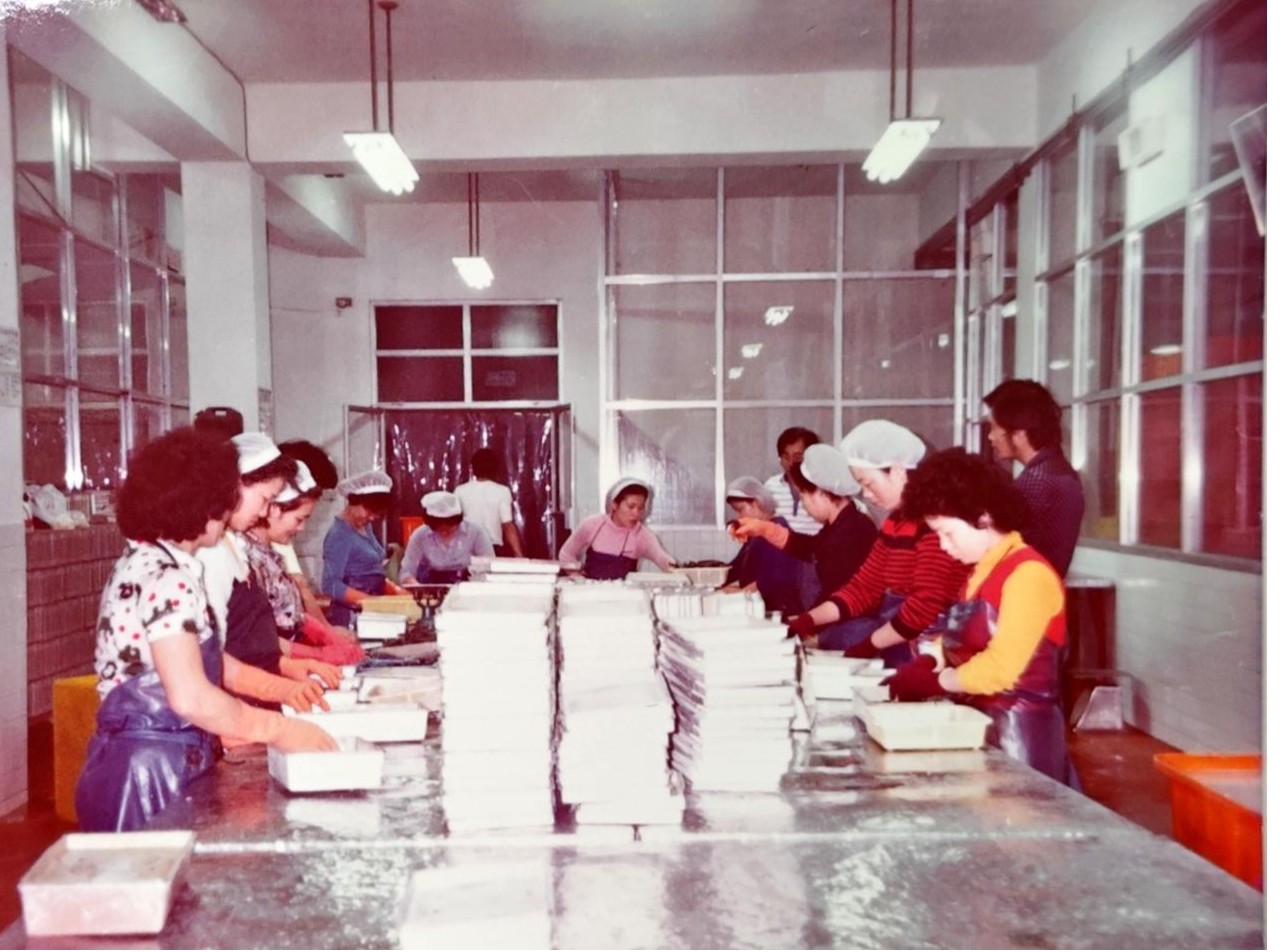
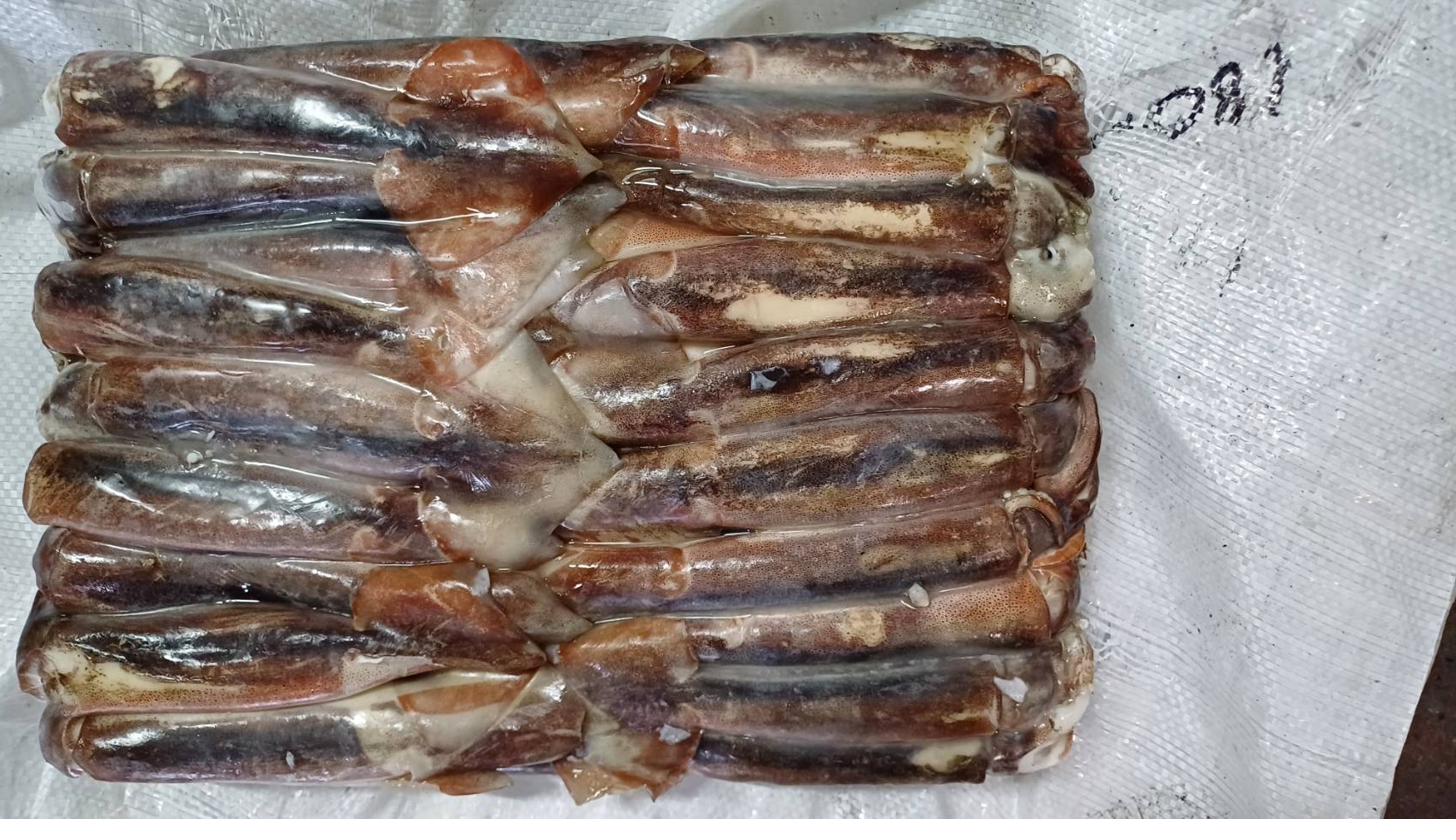
Trading and processing operations consolidated under a single corporate structure. NT$20M capital investment in processing and storage capacity for production of squid cleaned tubes, squid rings, and prepared foods lines including the abalone-flavored squid slices (鮑味片).
First mainland China operational base. Activity lines: frozen-squid processing for domestic mainland and re-export, squid dry-product processing for export, and 2,000-MT bonded cold-storage capacity for trading.
2003 Plant · BXTW-FAC-1Capital · NT$105M
Bai Xian Seafood Corporation (百鮮實業股份有限公司) established at Kaohsiung Qianzhen.
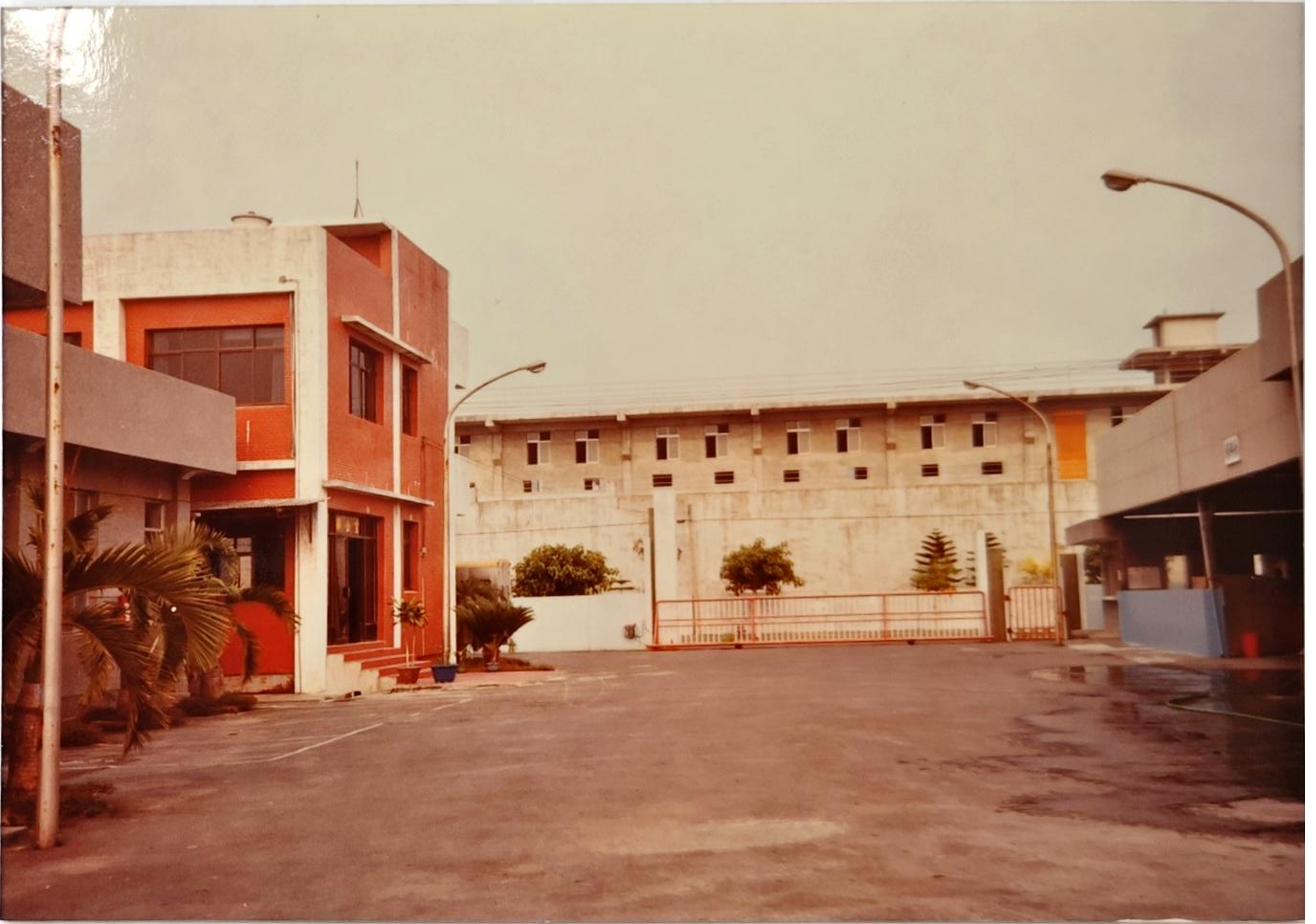
A NT$105M investment in facility with automated processing equipment and refrigeration systems. The Qianzhen site becomes BXTW-FAC-1, the present-day primary processing facility for the Baixian Taiwan business group.
2004 Cold storage · BXTW-FAC-2Capital · NT$202.5M
Yen Jing International Cold Storage commissioned. Pricing leverage created.
Combined investment of NT$202.5M. The storage facility becomes BXTW-FAC-2. Critically, the scale of bonded storage allows in-season bulk procurement at the catch peak, lowering unit cost and creating pricing leverage in the squid category — the firm transitions from price-taker to category price-setter.
Era III · 2005 — Present
Mainland depth, global reach.
A two-phase Fuzhou facility programme deploying ~RMB ¥89M of capital across 31,960 m² of co-located processing and cold-storage capacity, including the first customs-bonded cold-storage warehouse in what is now the Fuzhou Area of the China (Fujian) Pilot Free Trade Zone. The firm exits owned distant-water operations by 2014, transitioning to a contract-fleet structure as the asset base shifts upstream-to-downstream. By 2026, the present-day three-flow operating model and in-house research function are formalised.
RMB ¥89M~US$13M at period ratesMainland capital · 2005—2021
Formal mainland China subsidiary. Strategic land acquisition: 40 Chinese mu (~2.67 Hectares) of industrial land at the Changan Investment Zone, Fuzhou.
2007 — 2014 Phase 1 build-outCapital · RMB ¥45M
BXGC-FAC-3 first-phase facility completed and progressively expanded.
No. 7 Chang Fa Rd., Fuzhou Mawei. Initial RC-structure construction 2007–2009: main processing workshop, ammonia refrigeration room, boiler facility, ancillary buildings, and on-site dormitory totalling 11,200 m², plus 2,000 m² of low-temperature cold storage. Subsequent expansions in 2010 (340 m² steel-frame second-floor unit) and 2014 (1,400 m² three-storey reserve unit, plus wastewater treatment expansion to 1,000 MT/day). Total Phase 1 floor area, with additional ancillary areas: 15,840 m² / 4,800 ping at RMB ¥45M cumulative investment.
BXGC-FAC-3 · Phase 1 · Fuzhou Mawei
2013 Cold storage · Bonded zone
Customs-bonded cold-storage capacity established.
Includes the first customs-bonded cold-storage warehouse in what is now the Fuzhou Area of the China (Fujian) Pilot Free Trade Zone. The firm establishes itself among the leading global operators in Cololabis saira (Pacific saury) and selected cephalopod markets.
Sourcing transitions to a contract-fleet structure with thirty-plus vessels annually across Taiwan and mainland China origin streams. The asset-heavy capability shifts upstream-to-downstream — fleet ownership exited, processing and cold-storage assets retained and expanded.
Dedicated expansion: 8,400 m² of low-temperature cold storage with full racking and material-handling systems, plus 7,070 m² of administrative offices, pallet bays, and machinery rooms. Total Phase 2 floor area: 15,470 m² / 4,700 ping at RMB ¥40M investment. Cumulative built-out floor area at BXGC-FAC-3 reaches 31,310 m² (~9,471 ping).
2017 Systems
Warehouse Management System (WMS) deployed at Fuzhou.
Cold-storage operations integrated under structured digital inventory tracking — full lot-traceability and real-time bonded-zone reconciliation.
2021 ThroughputCapital · RMB ¥4M
Fuzhou loading-platform expansion completed.
Additional 650 m² loading platform with capacity for 15 simultaneous container-truck spaces. Inbound-outbound throughput accelerated; multi-truck simultaneous handling enabled.
2025 Sixtieth anniversary
Sixty-first year of continuous operations.
Continuous operation since 1965, across the founding region (Penghu), the Taiwan operational base (Kaohsiung), and the present-day mainland operations (Fuzhou, Shanghai, Shenyang).
Sixtieth anniversary · Baixian Group · 2025
2026 Operating model · BX-TRADE-CRS formalised
Three-flow operational model in present form.
Export flows to international buyers; import flows into BXGC and BXTW for sister-group processing, distribution, and re-export; and third-party intermediation flows. The Commodity Research & Strategy Division (BX-TRADE-CRS) is formalised as the in-house publication function.
Pioneering record
Industry firsts the firm carried into the trade.
Four institutional firsts — channel, fleet, methodology, and structural integration — that have shaped the firm's competitive position across six decades.
First · 01
1977
Channel
First Taiwan operator to systematically export frozen shrimp into Japan.
Through Nan Chiao Co., Ltd., the firm grew to hold near-total share of Japan-bound frozen shrimp exports from Taiwan and introduced frozen shrimp into shabu-shabu hotpot and other Japanese foodservice channels at industrial scale for the first time.
First · 02
1983
Fleet
First Taiwan-flag 1,000-GT-class distant-water squid jigger.
Te Yi No.1 (德益一號) marks the firm's full transition into industrial-scale Illex argentinus jigging in the SW Atlantic — and the first time a Taiwan operator commissioned a vessel of this class for the fishery.
First · 03
1990
Methodology
Tail-count grading methodology established for Illex argentinus.
Tail-count specification grading became the industry reference for the Japanese market segment. The firm's grading discipline travelled from this point into the global cephalopod trade.
First · 04
1988
Structure
Industry-first vertical integration across the Taiwan seafood trade.
With the Baixianwu brand, the firm formalised a single coordinated chain — sourcing through owned and contracted vessels, processing through owned plants, cold storage in owned warehouses, and trade execution through an in-house trade team. The structural moat the firm operates from today was set in this year.
Operational footprint
Facilities and offices.
Two processing facilities, two dedicated cold-storage facilities, ~40,000 MT total capacity across Baixian Group — supported by administrative offices in Fuzhou, Shanghai, Shenyang, and the Kaohsiung headquarters.
Cross-strait footprint
PlantOffice
China and Taiwan operational footprint
A regional map of China and Taiwan showing facility and office locations: Kaohsiung on Taiwan (BXTW-FAC-1 processing, BXTW-FAC-2 cold storage, headquarters), Fuzhou Mawei on Fujian (BXGC-FAC-3 — co-located processing and cold-storage units, plus office), Shanghai and Shenyang offices on the mainland, and Taipei and Taichung regional offices on Taiwan.
Processing
BXTW-FAC-1 · Kaohsiung Qianzhen
Processing facility
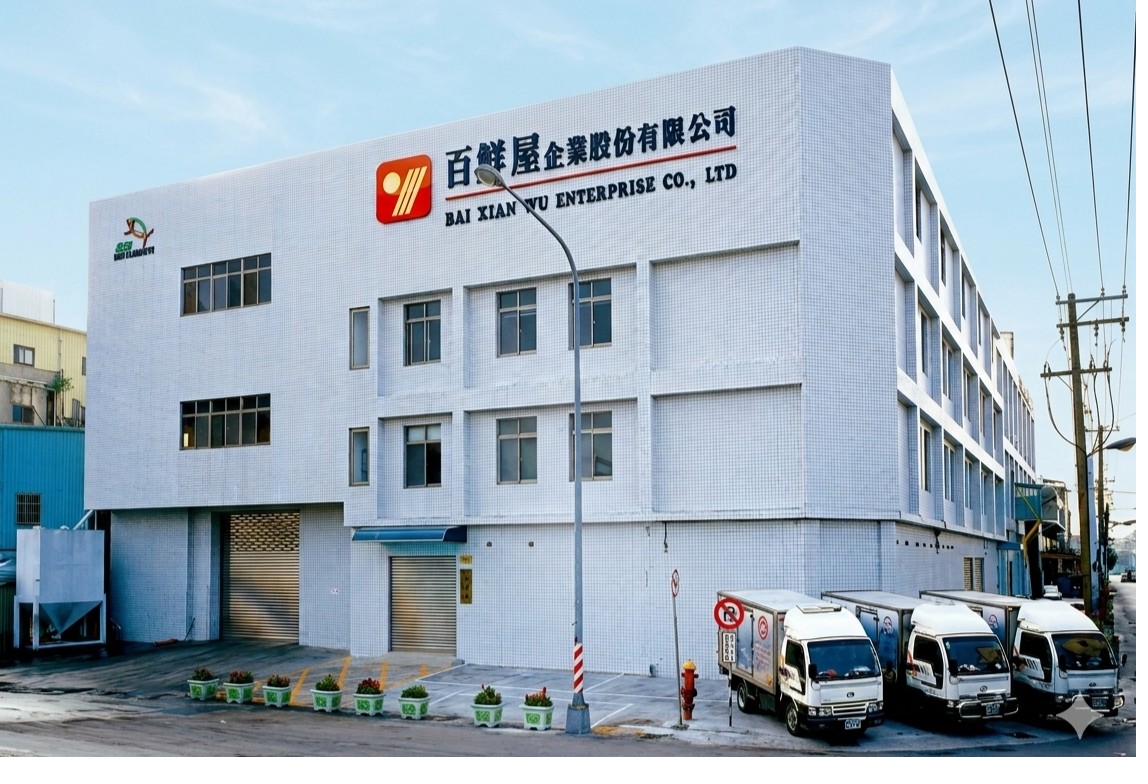
Primary processing operations for the Taiwan business group. Bai Xian Seafood Corporation (百鮮實業股份有限公司).
HACCP 7FH0043EU listedTFDA HACCP
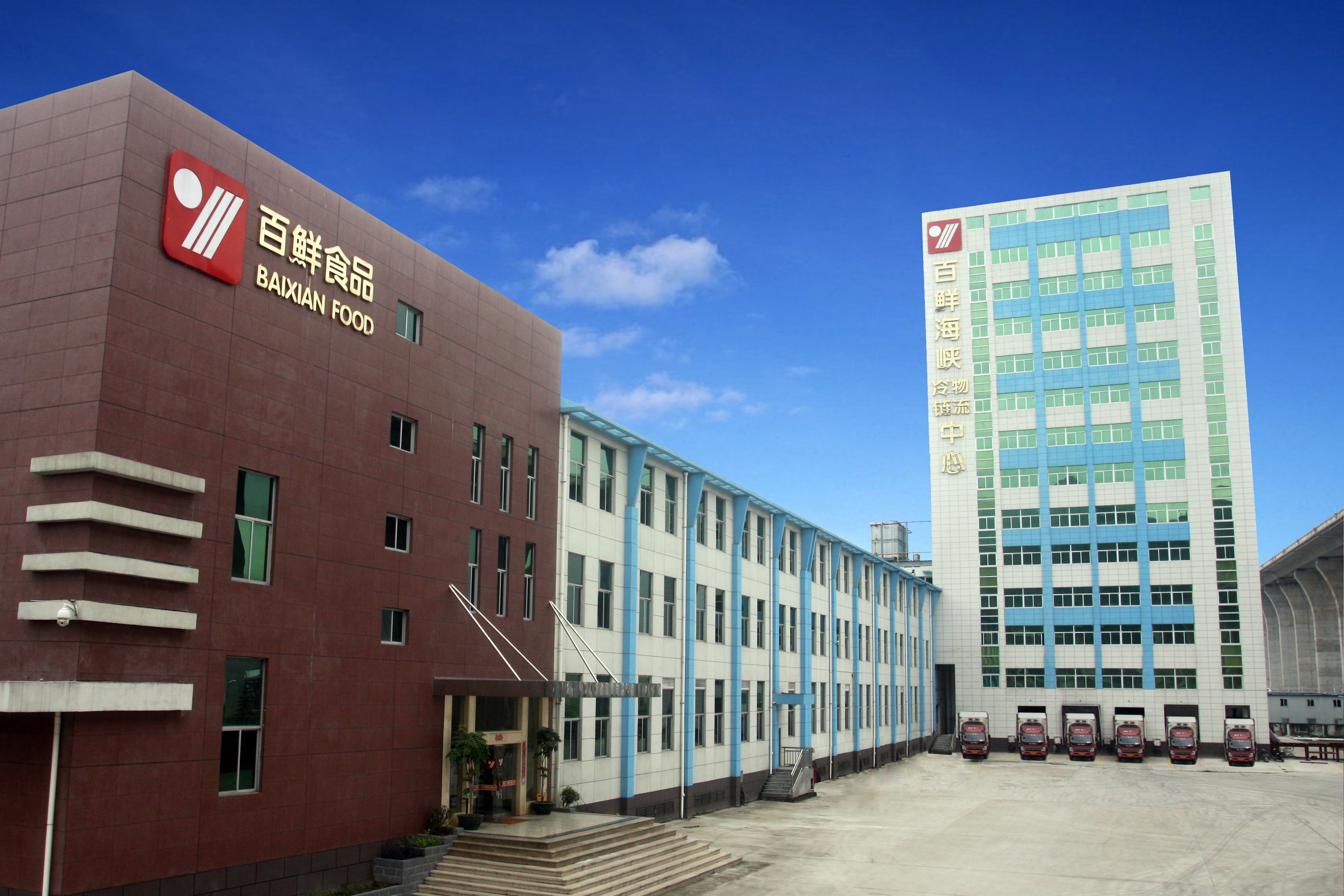
BXGC-FAC-3 · Fuzhou Mawei
Processing facility
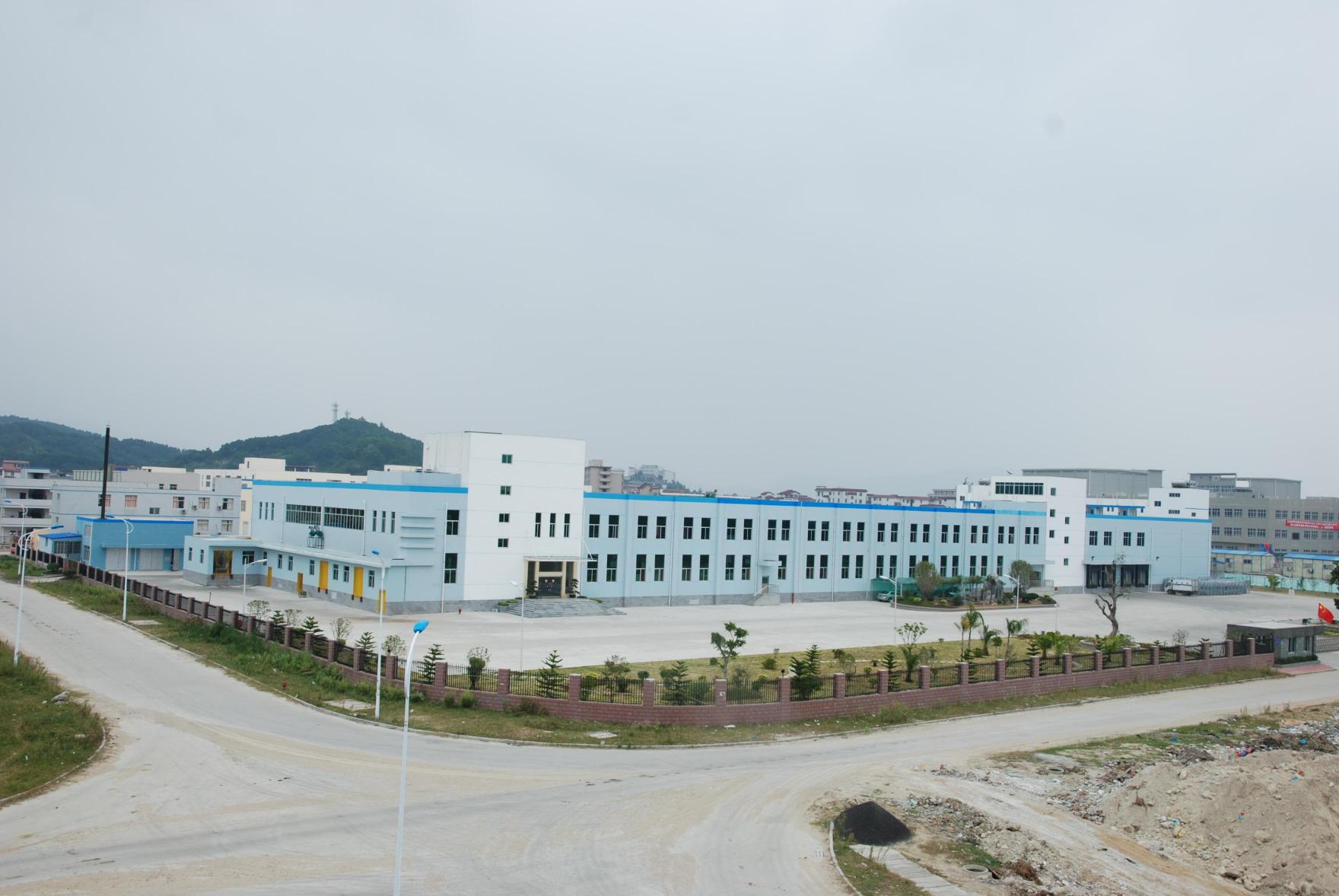
Primary processing operations for the Baixian Greater China business group. Baixian Food (Fujian) Co., Ltd. (百鮮食品(福建)有限公司). The processing unit at the BXGC-FAC-3 facility, co-located with the cold-storage unit on the same Mawei industrial site.
HACCP 3500/02246EU listedGACC
Cold storage
BXGC-FAC-3 · Fuzhou Mawei
Baixian Strait Intelligent Cold Chain Logistics Center
Dedicated cold-storage capacity for the Baixian Greater China business group. Includes the first customs-bonded cold-storage warehouse in what is now the Fuzhou Area of the China (Fujian) Pilot Free Trade Zone. The cold-storage unit at the BXGC-FAC-3 facility, co-located with the processing unit on the same Mawei industrial site.
HACCP 3500/02246EU listedGACC
BXTW-FAC-2 · Kaohsiung Xiaogang
Cold storage facility
Dedicated cold-storage capacity for the Baixian Taiwan business group. Approximately 10,000 MT capacity.
Group headquarters and the trade team's operational base. Co-located with Baixian Group corporate functions.
Fuzhou
BXGC · co-located with FAC-3
Shanghai
BXGC · Eastern China
Shenyang
BXGC · Northeastern China
Taipei · Taichung
BXTW · Taiwan regional
Research capability
Commodity Research & Strategy.
The Commodity Research & Strategy Division (BX-TRADE-CRS) produces published research on the commodities our team operates. The division covers species-level catch dynamics, regulatory developments across the FAO areas where we source, and quarterly outlooks for buyers and counterparties.
Output is signed under the divisional byline and published on the Insights portal, available in eight languages, with structured notes on methodology and source citations.
A research-led trade team inside a vertically integrated Greater China seafood corporation.
Whether you are evaluating new sourcing for European foodservice, Asian retail, or specialty processing — our regional analysts respond in your language and quote within forty-eight hours.